
A Home Phone for Kids: Staying in Touch Before the First Smartphone
Aug 7, 2026 · 6 min read · Product Guide
Many families already have smartphones, yet children still lack a phone they can easily use. A shared home phone gives family calls a place in the household.
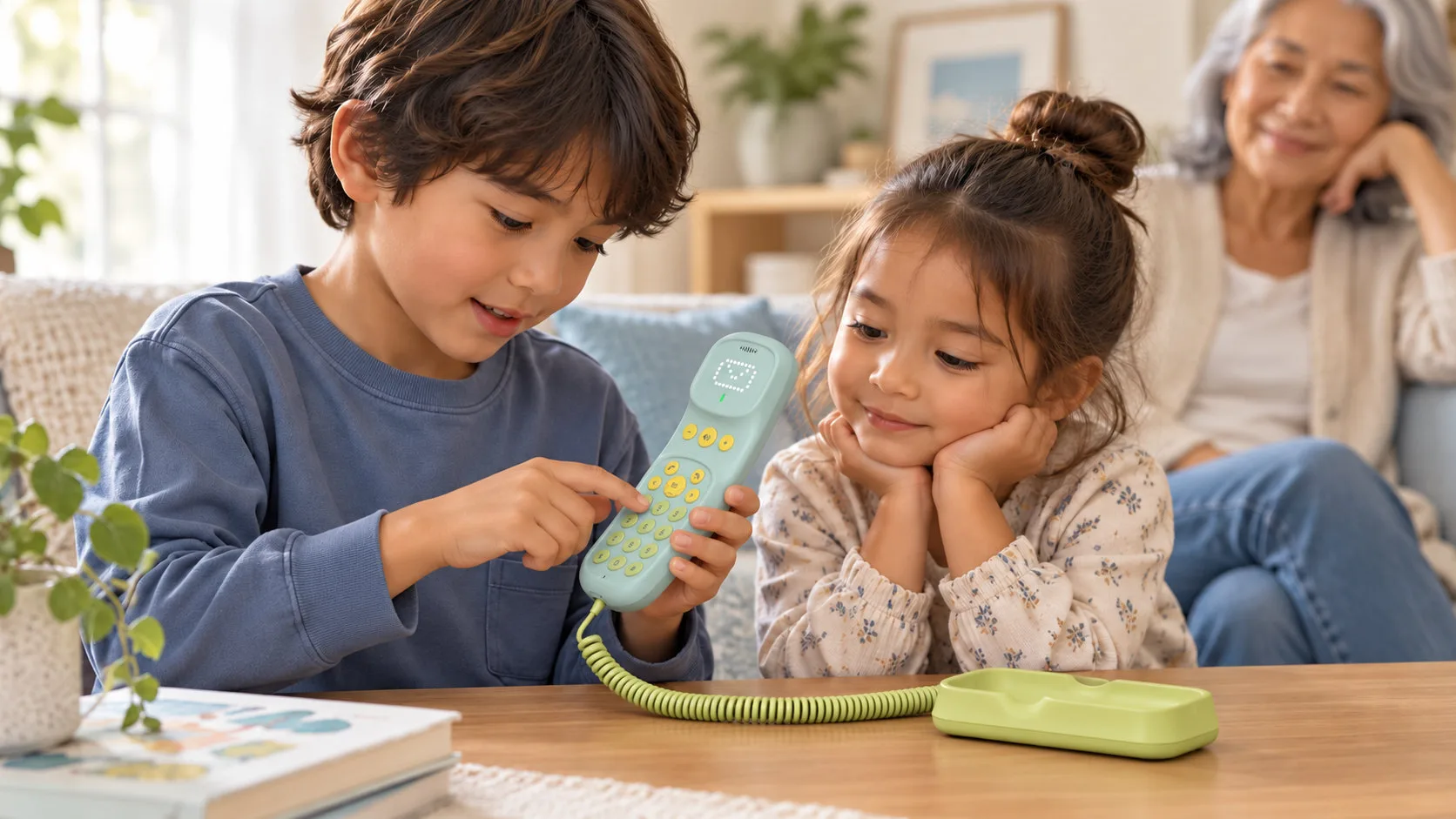
A child comes home with a drawing they want to tell Dad about. He is still at work. Grandma is there, but her mobile phone is charging in another room. The child asks to borrow it, waits for it to be unlocked, and asks her to find Dad’s number.
There are already phones in this family. What the child lacks is a phone they can easily use.
That is the question a home phone for kids can answer. It gives family conversations a place in the household before anyone has decided that the child needs a smartphone of their own.
Key Takeaways
- Having smartphones in the household does not always give children convenient access to family calling.
- A shared home phone can serve several children, with adults managing the permitted contacts.
- K1 offers screen-free calling over Wi-Fi SIP; the calling service and management arrangement need to be included in the offer.
Why Borrowing a Parent’s Phone Is Not Always Convenient
An adult’s smartphone follows the adult. It goes to work, sits beside a laptop during a meeting or travels in a bag on the school run. Even when it is at home, it may be in use.
For a child, making a call therefore starts with finding the owner and asking for access. The adult may need to stop what they are doing, unlock the device and open the contact. If the conversation is interrupted, the child may need help getting back to it.
For an occasional call, this may be entirely sufficient. The inconvenience becomes more noticeable when a child regularly wants to speak to a parent working elsewhere or to relatives who live at a distance.
A household phone gives those conversations a regular place, even when the adults are using their own devices.
A Family Phone Does Not Have to Belong to One Child
Buying a child’s first personal device raises questions about ownership. Does it go everywhere with them? Can a sibling use it? Who is responsible for keeping it charged and finding it when it disappears?
A shared home phone starts with a simpler arrangement: it belongs to the household and stays there.
Two siblings might use it differently. One can dial a familiar number independently, while the other needs help or uses a configured calling button. They do not need identical skills to share the same phone.
The contact list needs to make sense for everyone using it. Parents, grandparents and other agreed relatives may be enough. If a button is assigned to a person, each child should understand whom it reaches.
This also makes it useful in a grandparent’s home, where children visit regularly. The adults can establish who may be called from that house without handing over their personal phones each time.
Leave Room for Conversations That Are Not About Arrangements
Much of the discussion around children’s phones concerns practical coordination: pickup times, journeys and changed plans. At home, some calls have no task to complete.
A child might want a grandparent to hear a song they have learned. Another might want to describe a football match while the details are still fresh. A parent working away may have time for a short conversation before dinner.
These are reasons for a home phone to be used between urgent situations. They also give families a better way to judge its value than asking how many features it has.
The person answering matters as much as the person dialing. A relative may prefer a call after lunch; a working parent may be available during a particular break. Agreeing on a convenient time gives the child a reasonable expectation of when someone is likely to answer.
How K1 Fits the Household
KAER K1 is a screen-free kids phone with a handset and physical calling controls. It supports manual dialing, one-touch calling to configured contacts, whitelist calling and a preset SOS button. Designated contacts can be set through a Web backend or app.
Adults handle the settings, while children use the handset and calling controls. There is no social media, app store or web browsing on the device.
K1 uses Wi-Fi SIP and does not require a SIM card in the device. Through a configured calling service, a child can call a parent on their ordinary mobile number. Available destinations and call charges depend on that service.
What the First Few Calls Can Tell You
The first trial can be an ordinary conversation with someone the child knows. Let the child start the call, with an adult nearby to help when needed.
A few attempts will show whether a calling button is useful, whether a number needs practising and whether the handset is comfortable to use. Keep the phone in a familiar shared area where it can be reached and heard clearly.
An unanswered call is worth discussing too. Dad may be in a meeting, or a grandparent may be outside. The child needs an agreed next step: wait, try another permitted contact or ask the adult who is with them. Explain the preset SOS button separately, including when to use it and who it contacts.
A home phone offers a way to communicate. The amount of assistance a child needs still depends on the child and the situation.
A Household Calling Product with Its Own Purpose
For brands and distributors, the useful starting point is a family that already owns smartphones but wants to make calling easier for its children.
The offer can be explained through shared use, familiar controls and adult-managed contacts. A demonstration of a child calling a relative tells that story more clearly than a comparison of every smartphone function.
A home phone can continue serving younger siblings and family conversations even after an older child gets a personal device. Its place in the household depends on whether people keep using it to speak with each other.
For a broader look at home and portable options, read A Child’s First Phone: Start with Where They’ll Use It.
FAQ
Is a home phone useful if parents already have smartphones?
It can be, particularly when children regularly need help borrowing or accessing those phones. Occasional calls may still be adequately handled through an adult's device.
Can children of different ages share K1?
Yes. They can share the household phone and its configured contacts, with assistance suited to each child's ability.
Can K1 be used at a grandparent's home?
Yes, with suitable Wi-Fi, a configured SIP calling service and contacts appropriate to that household.
Do parents need to answer through an app?
Calls can reach parents on their ordinary mobile phones through the configured SIP calling service. The app or Web backend is used for supported device settings, such as designated contacts.
Explore a Home Phone for Your Market
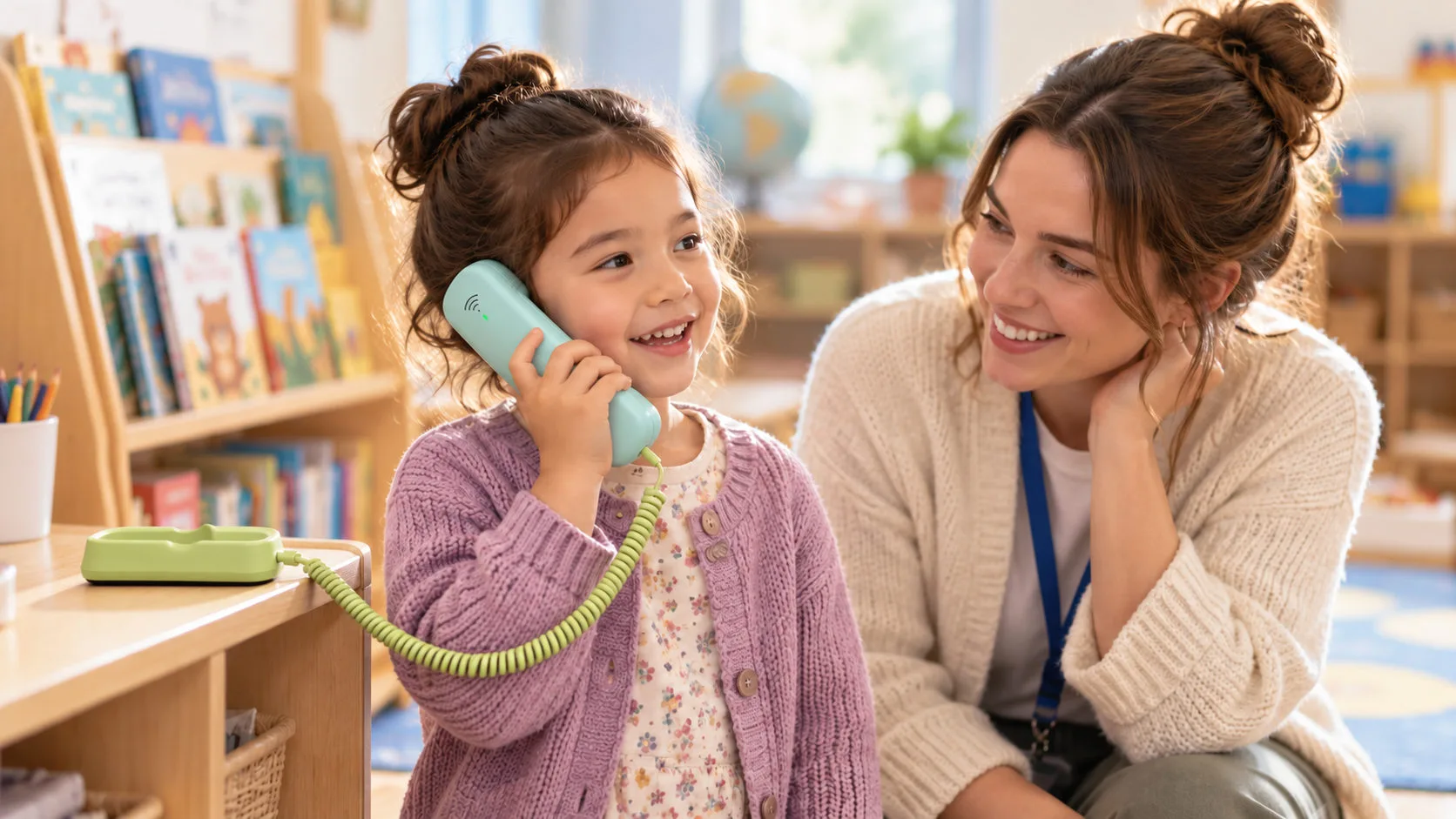
If your customers want a shared family phone before a child's first smartphone, discuss K1 samples with KAER. Share your target market, calling-service plans and branding needs.
Contact Us — vicky@kaer.cn